
Neonics in Pesticides
 Neonicotinoics (or neonics) are a powerful class of pesticides used on many crops.
They persist in soil, water, and plants for a very long time, and are lethal to bees … Read more
Neonicotinoics (or neonics) are a powerful class of pesticides used on many crops.
They persist in soil, water, and plants for a very long time, and are lethal to bees … Read more
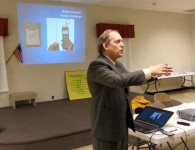
Our February member’s meeting guest speaker was Robert (Bob) Lane. Bob is an Extension Specialist with the Virginia Seafood Agriculture Research and Extension Center which is a Virginia Cooperative Extension of Virginia Tech. He specializes in Engineering, Process Applications, Energy and Resource Management associated with seafood processing.
His … Read more

During the February member’s meeting, the Chapter welcomed two additional members.
Pictured is Chapter President Ray Powell swearing in … Read more
Prior year issues of our monthly Chapter newsletter are available for download from the S-N IWLA Blue Heron Times newsletter archives.
As a convenience, if you wish to … Read more

On Tuesday January 26th, N2 publishing sponsored a community event at the Planters Club in northern Suffolk. N2 publishing creates magazines focused on specific neighborhoods and associated businesses. The magazine includes personal articles about both residents and businesses in order to aid in their efforts to transform neighborhoods into communities.
The … Read more
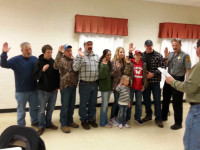
During the January member’s meeting, the chapter welcomed several new members and their families. The chapter gained three additional family memberships and increased one existing membership to include family members.
Pictured is Chapter President Ray Powell swearing in our newest chapter members, Patrick Rouse and grandson, … Read more
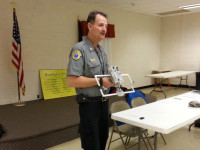
Our first member’s meeting guest speaker for the year was W. Mason Copeland. Mason is a Lieutenant assigned to the Suffolk Fire and Rescue Bureau. Lt. Mason also became one of our chapter’s newest members as he was sworn in at the meeting.
During Lt. Copeland’s presentation he discussed the … Read more
Prior year issues of our monthly Chapter newsletter are available for download from the S-N IWLA Blue Heron Times newsletter archives.
As a convenience, if you wish to receive our monthly newsletters on a continuing basis, please consider adding your email address to our monthly email Newsletter distribution list, using the handy Read more
The Nansemond River Preservation Alliance is seeking volunteers to spend a couple of hours this month restoring a 100-foot buffer adjacent to North Suffolk’s Sleepy Hole Park’s new 300-foot pier and kayak/canoe launch. The water access project is almost complete and is expected to open to the public later this … Read more

A sterilization program to stop coyotes from hybridizing with the only wild population of red wolves in the world has been successful so far, according to new research. “Coyote genes are under 4 percent in the red wolf genome, so that’s good,” said Eric Gese, a research wildlife biologist with … Read more